StyleSense

School project fall 2025
  • Challange

    • Public spaces are not merely commercial zones, they are vital sites for social exchange and cultural expression.


    • Attention was drawn to stores with less engaging storefronts that struggled to attract passers-by.

    • Technological, interactive, and playful store fronts contribute to a more engaging customer experience, but need to be combined with an ability for constant renewal.

  • Solution

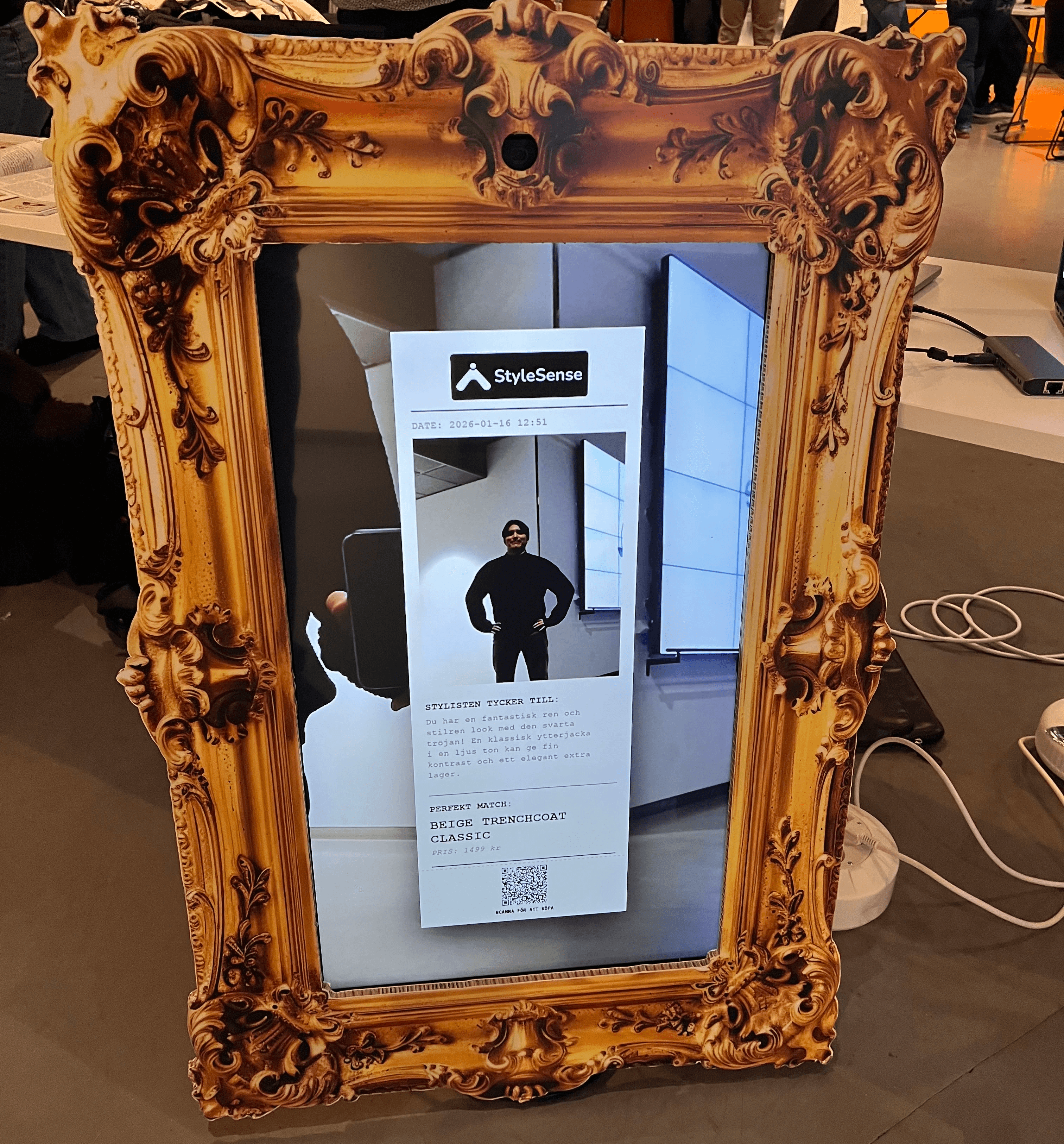
    • Interactive mirror that gives personalized style advice through positive and engaging feedback.


    • Narrowcasting using computer vision and LLM. Advice based on actual products in store.


    • StyleSense shifts the interaction toward long term loyalty and cohesive brand experiences. Rather than focusing solely on isolated purchase moments.

  • Team

    • Project with three other students:

      Samuel Stone (pro in management);

      Yousef Al Tall (pro in constructive feedback);

      Zack Lagerström (pro in hi-fi prototypes).


    • Iterative work through Double Diamond.

Challange

  • Public spaces are not merely commercial zones, they are vital sites for social exchange and cultural expression.


  • Attention was drawn to stores with less engaging storefronts that struggled to attract passers-by.

  • Technological, interactive, and playful store fronts contribute to a more engaging customer experience, but need to be combined with an ability for constant renewal.

Solution

  • Interactive mirror that gives personalized style advice through positive and engaging feedback.


  • Narrowcasting using computer vision and LLM. Advice based on actual products in store.


  • StyleSense shifts the interaction toward long term loyalty and cohesive brand experiences. Rather than focusing solely on isolated purchase moments.

Team

  • Project with three other students:

    Samuel Stone (pro in management);

    Yousef Al Tall (pro in constructive feedback);

    Zack Lagerström (pro in hi-fi prototypes).


  • Iterative work through Double Diamond.

The process

Problem and design space

Design ideas

High fidelity

Evaluation

Problem and design space

Established through two primary methods of data collection, observations and literature studies. Thematic analysis resulted in a starting point for the project, store fronts. Problem and design space was under constant change as the project progressed, a scary but important part of a design situation.

Design ideas

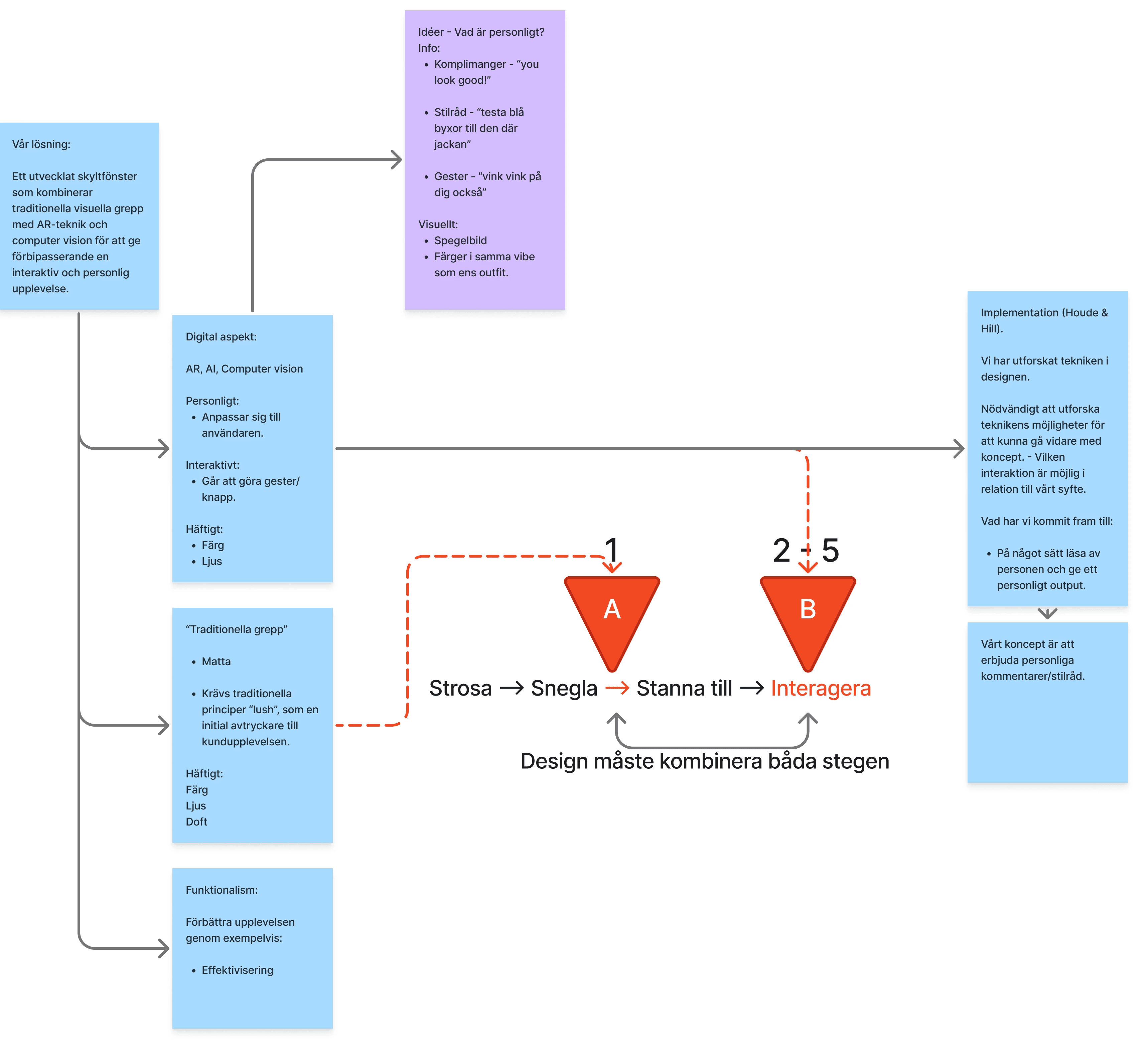
Triangle model created by Houde & Hill (1997) enabled discussion on the different dimensions of the design work - a common design language. Concretization for divergent phases include storyboard, user flow and scenarios. Convergence was performed through affinity diagram, critical review and user/expert evaluation. In line with ISO 9241-210:2019.
High fidelity

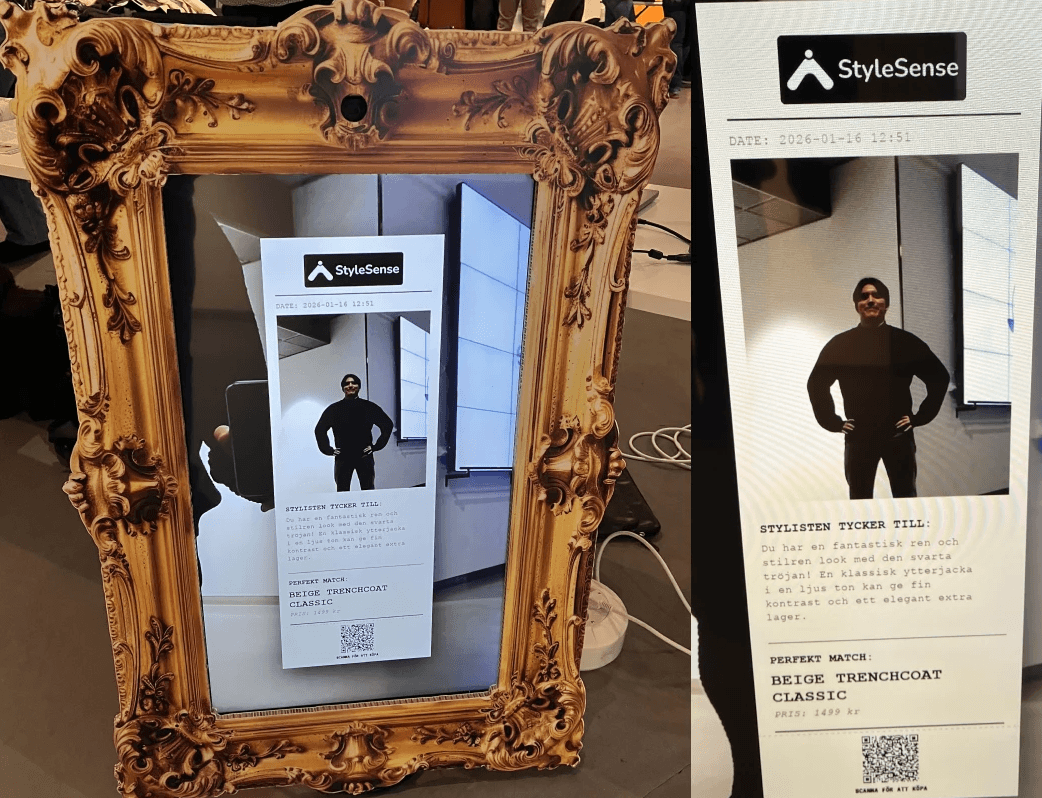
Backend using Python and a simple HTML interface, integrated Google’s Gemini to analyze and generate real-time style advice and recommendations. By housing the digital interface within a physical frame, the “mirror” became a familiar yet innovative object that brought traditional retail and interactive technology closer.
Evaluation

An important stage of the process was usability testing involving visual merchandisers and users to ensure the product met standards required for public spaces. Insights: while users responded positively to the emotional boost of compliments, they also sought a more direct link to the retail experience. In response, we implemented a final integration of functional value, where StyleSense recommends products from a store’s catalog tailored to the user’s analyzed outfit.