Häktet
School project fall 2024
The process
Contextual inquiry
Future workshop
Prototyping
Evaluation
Contextual inquiry
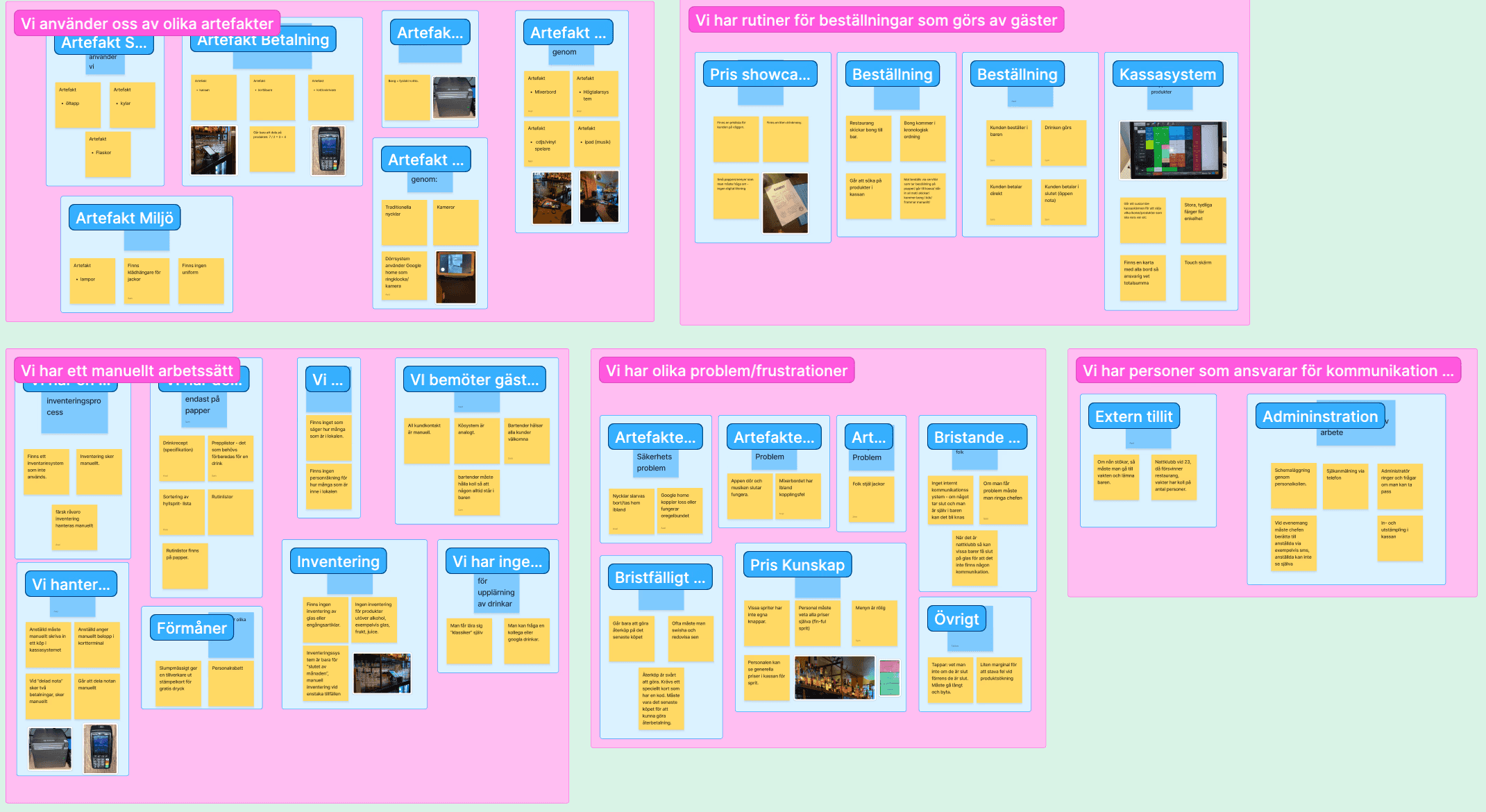
Observation followed by an interview with staff to understand workflow and to identify potential challenges or needs. This became the foundation for future design solutions. Findings included: poor inventory tracking, inefficient communication, and manual workflows.
Future workshop
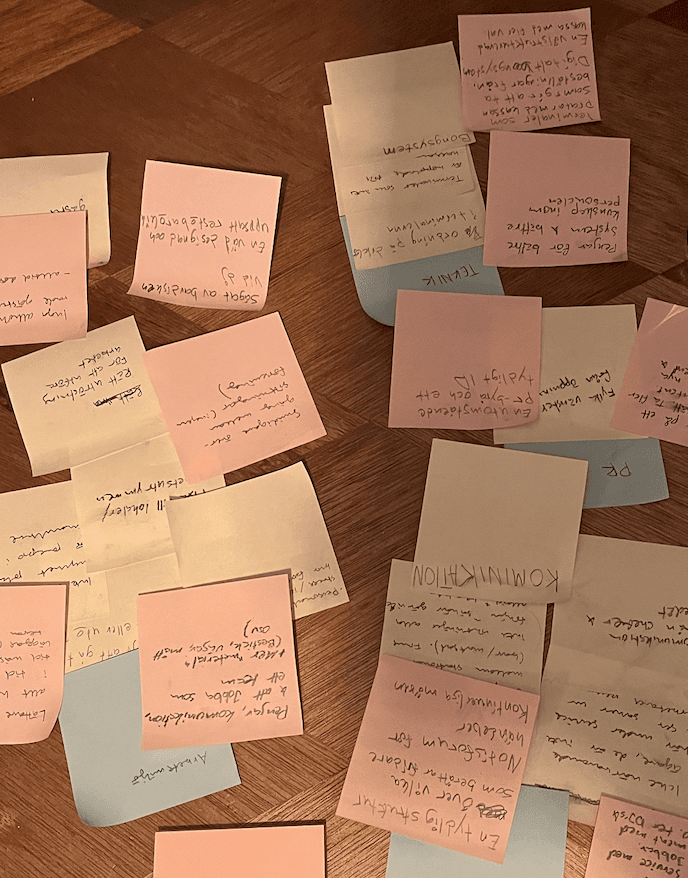
Brainstorming with stakeholders. Both critique on current workflows and imagination of ideal future strengthened the outline of the design process. Concepts now focus on communication and task management.
Prototyping
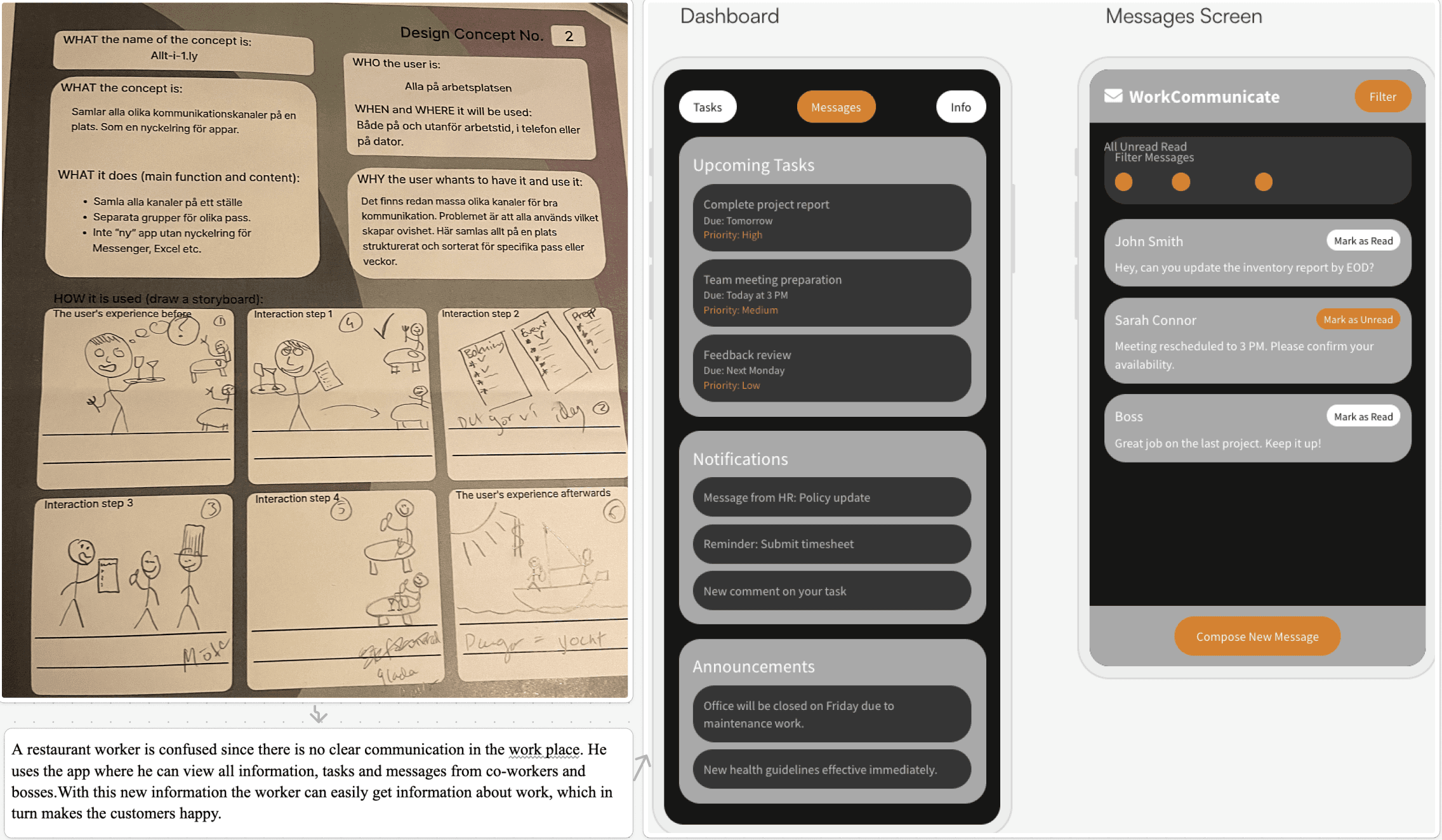
With insights from previous iterations, prototyping with participants resulted in a first step towards solutions existing in our real world. Stakeholders actively contributed by sketching workflows, creating storyboards, and testing AI-generated wireframes.
Evaluation
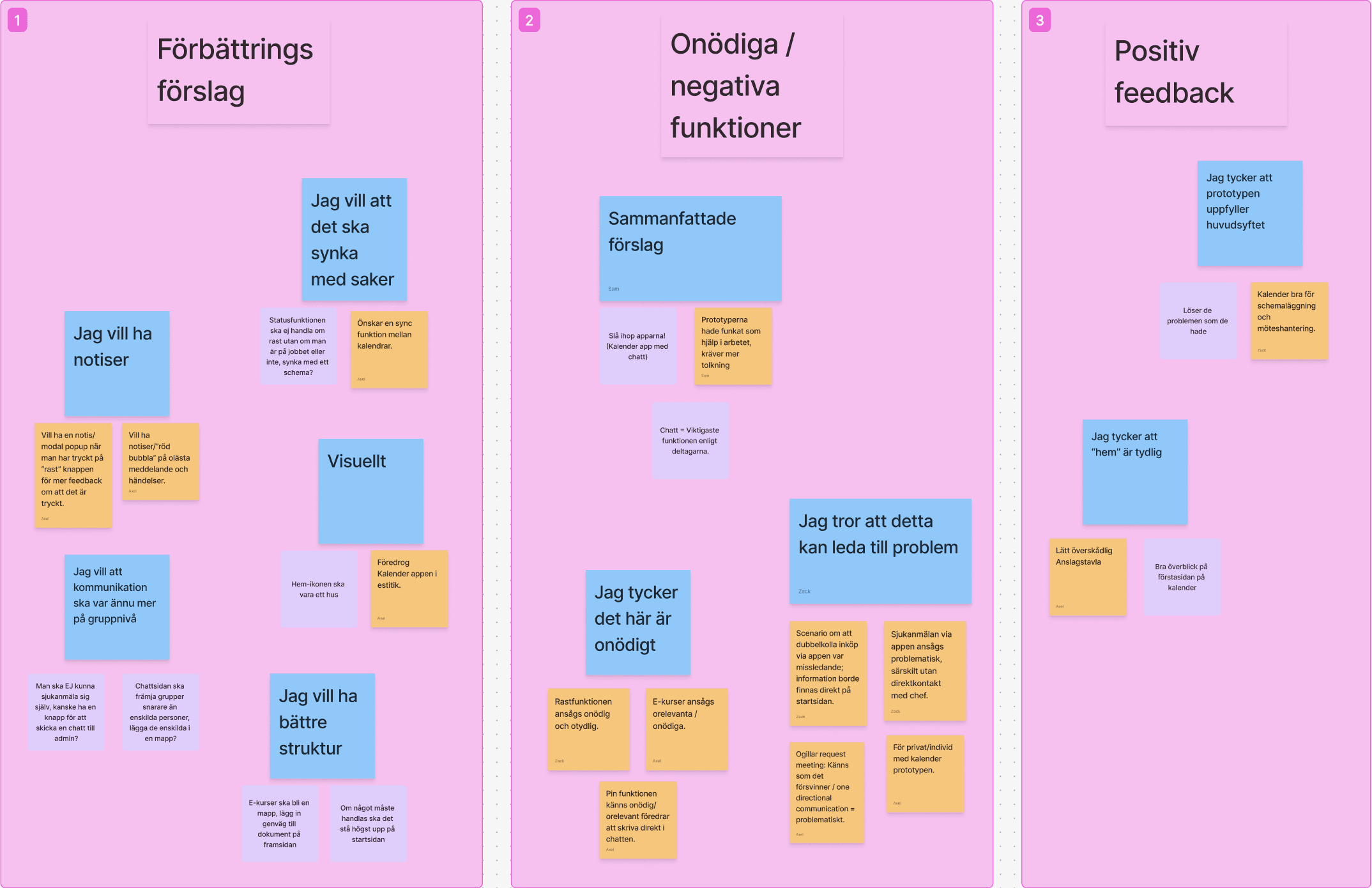
Stakeholders tested two further developed prototypes made from early prototypes. Feedback like identifying strengths and areas for improvement resulted in a single solution combining features from both versions.
What is Participatory design?
Participatory design is a methodology that places the user at the center of the design process, enabling them to express their needs through various methods even without fully understanding the language of professionals.