Häktet

School project fall 2024

Challange

  • Connection between the risk of poor well-being as a result of low control in aspects such as influence in decision-making and the pace of one's work.


  • Stress arises because of poor information and communication in the digital working environment before, during and after the work shift.


  • No separation in digital working environment and digital private life.

Solution

  • A digital workplace that collects all work-related information in one place.


  • The employee gets greater control and can reduce the amount of stress in the digital- and physical working environment.


  • This leads to a proactive and autonomous work environment allowing the employee to focus on customer service.

Team

  • Project with three other students:

    Samuel Stone (pro in management);

    Yousef Al Tall (pro in constructive feedback);

    Zack Lagerström (pro in hi-fi prototypes).


  • I have gained knowledge in conducting workshops both as a facilitator and an observer.

  • Challange

    • Connection between the risk of poor well-being as a result of low control in aspects such as influence in decision-making and the pace of one's work.


    • Stress arises because of poor information and communication in the digital working environment before, during and after the work shift.


    • No separation in digital working environment and digital private life.

  • Solution

    • A digital workplace that collects all work-related information in one place.


    • The employee gets greater control and can reduce the amount of stress in the digital- and physical working environment.


    • This leads to a proactive and autonomous work environment allowing the employee to focus on customer service.

  • Team

    • Project with three other students:

      Samuel Stone (pro in management);

      Yousef Al Tall (pro in constructive feedback);

      Zack Lagerström (pro in hi-fi prototypes).


    • I have gained knowledge in conducting workshops both as a facilitator and an observer.

The process

Contextual inquiry

Future workshop

Prototyping

Evaluation

Contextual inquiry

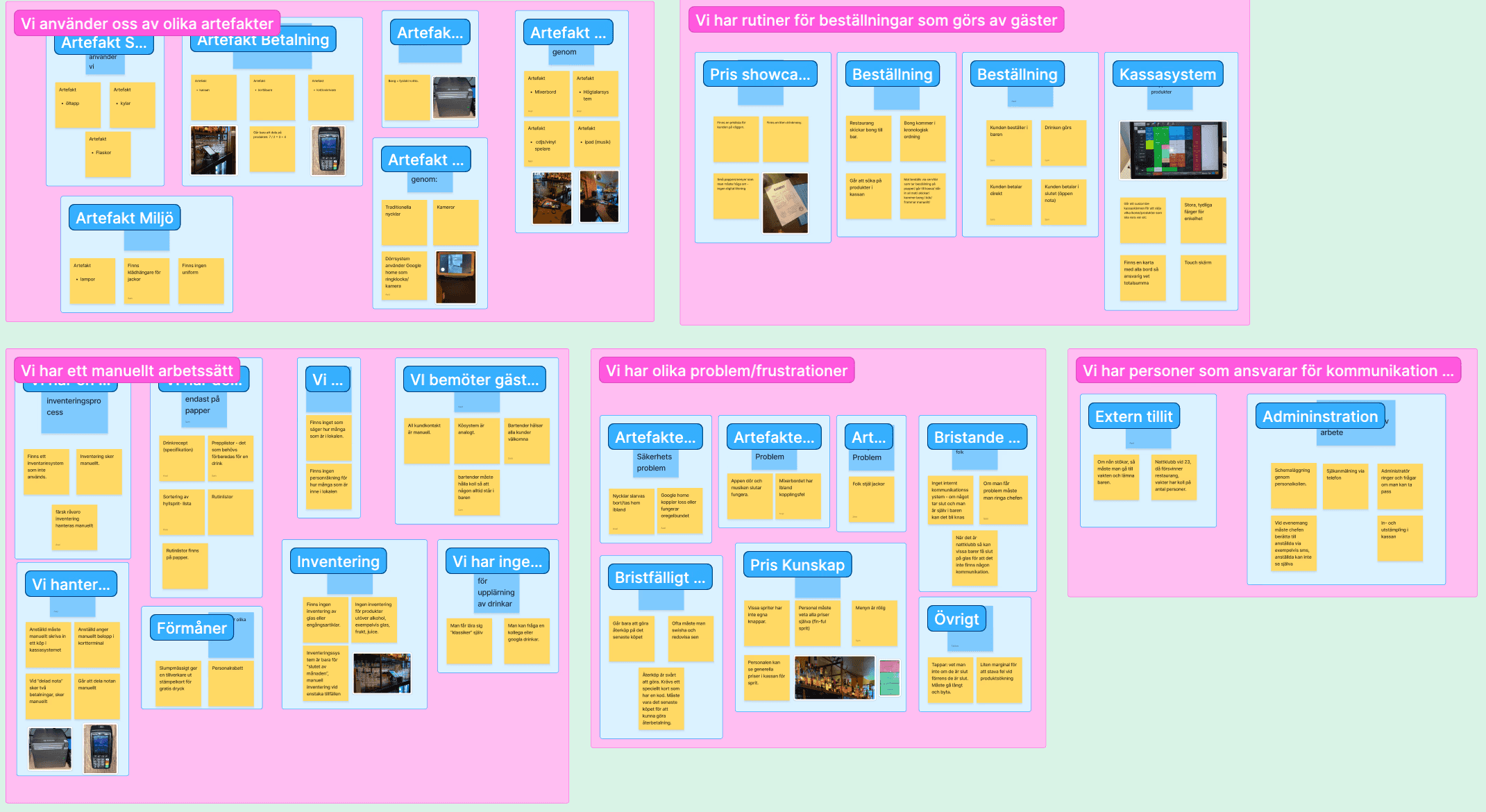
Observation followed by an interview with staff to understand workflow and to identify potential challenges or needs. This became the foundation for future design solutions. Findings included: poor inventory tracking, inefficient communication, and manual workflows.
Future workshop

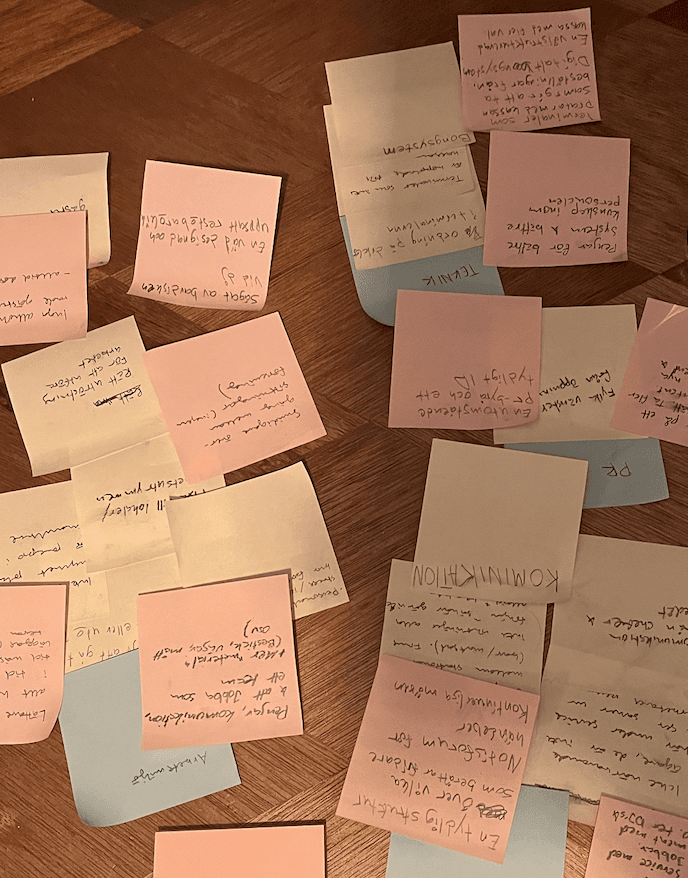
Brainstorming with stakeholders. Both critique on current workflows and imagination of ideal future strengthened the outline of the design process. Concepts now focus on communication and task management.
Prototyping

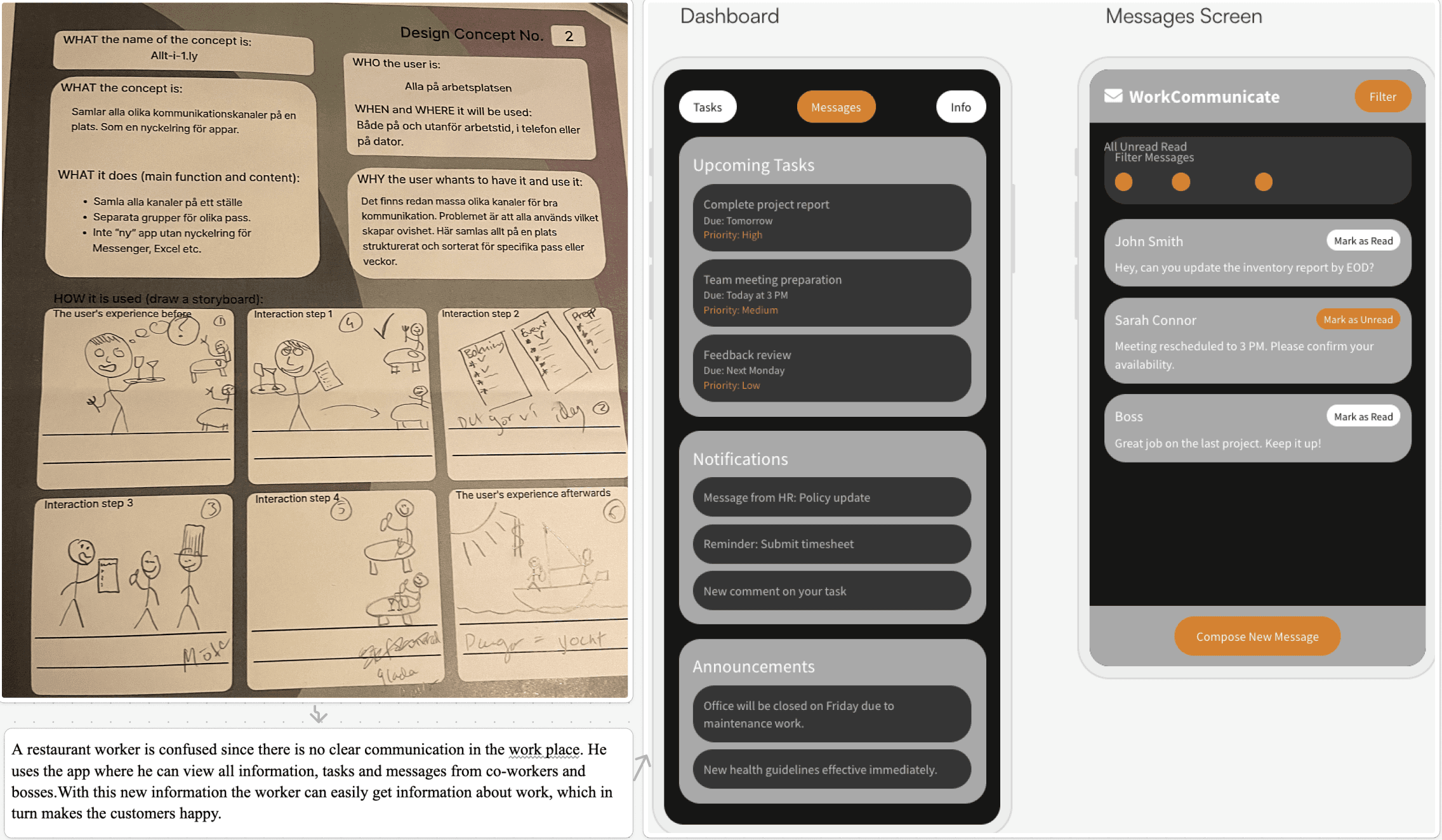
With insights from previous iterations, prototyping with participants resulted in a first step towards solutions existing in our real world. Stakeholders actively contributed by sketching workflows, creating storyboards, and testing AI-generated wireframes.
Evaluation

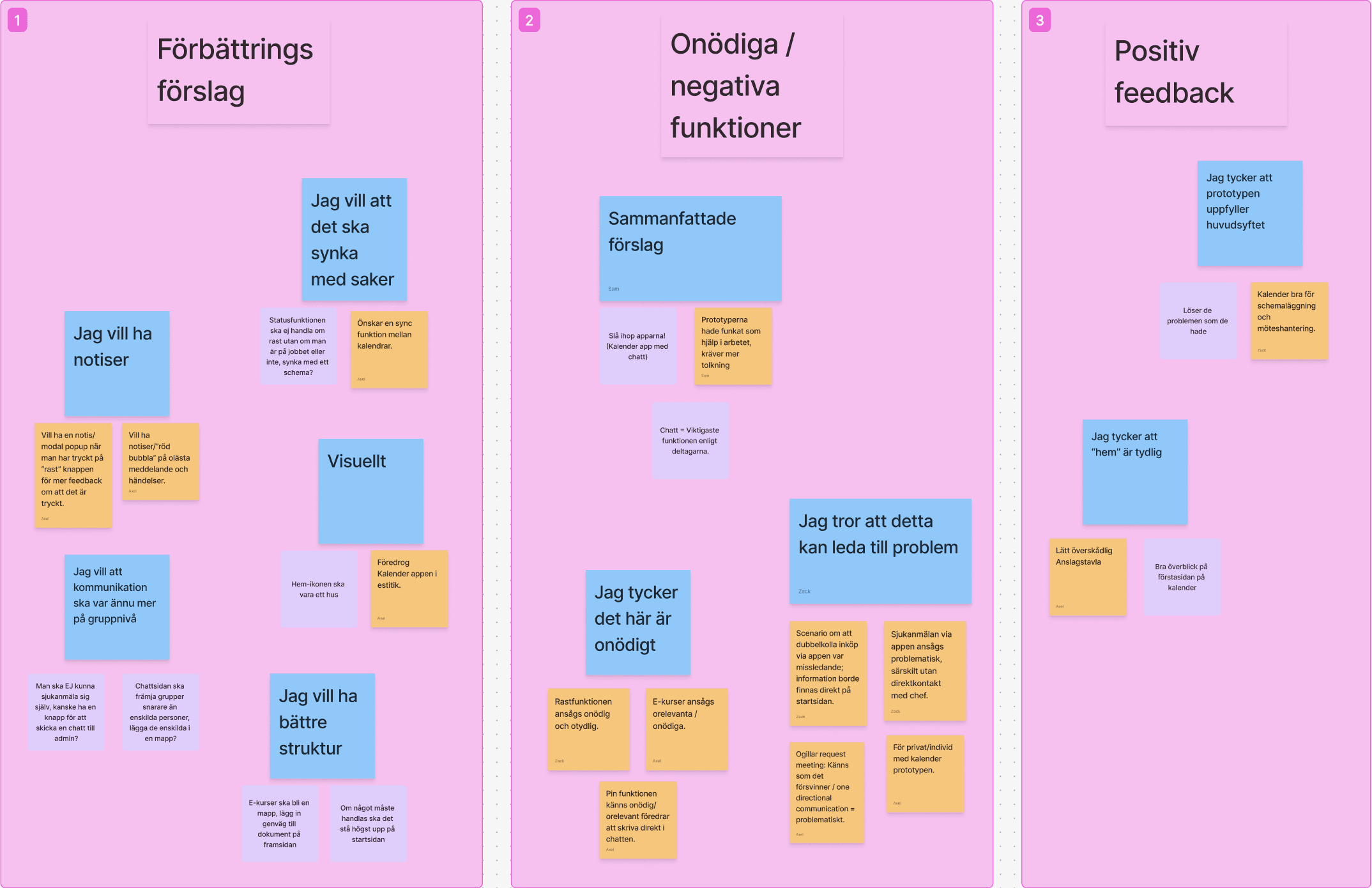
Stakeholders tested two further developed prototypes made from early prototypes. Feedback like identifying strengths and areas for improvement resulted in a single solution combining features from both versions.
What is Participatory design?

Participatory design is a methodology that places the user at the center of the design process, enabling them to express their needs through various methods even without fully understanding the language of professionals.

Further reading

Read about the project in depth. I have written one argumentative essay and one report in swedish.

You will be redirected to Google Drive.