NVV
School project spring 2024
The process
4 W's template
Prototyping on paper
Prototyping "The box"
Prototyping in X Code
4 W's template
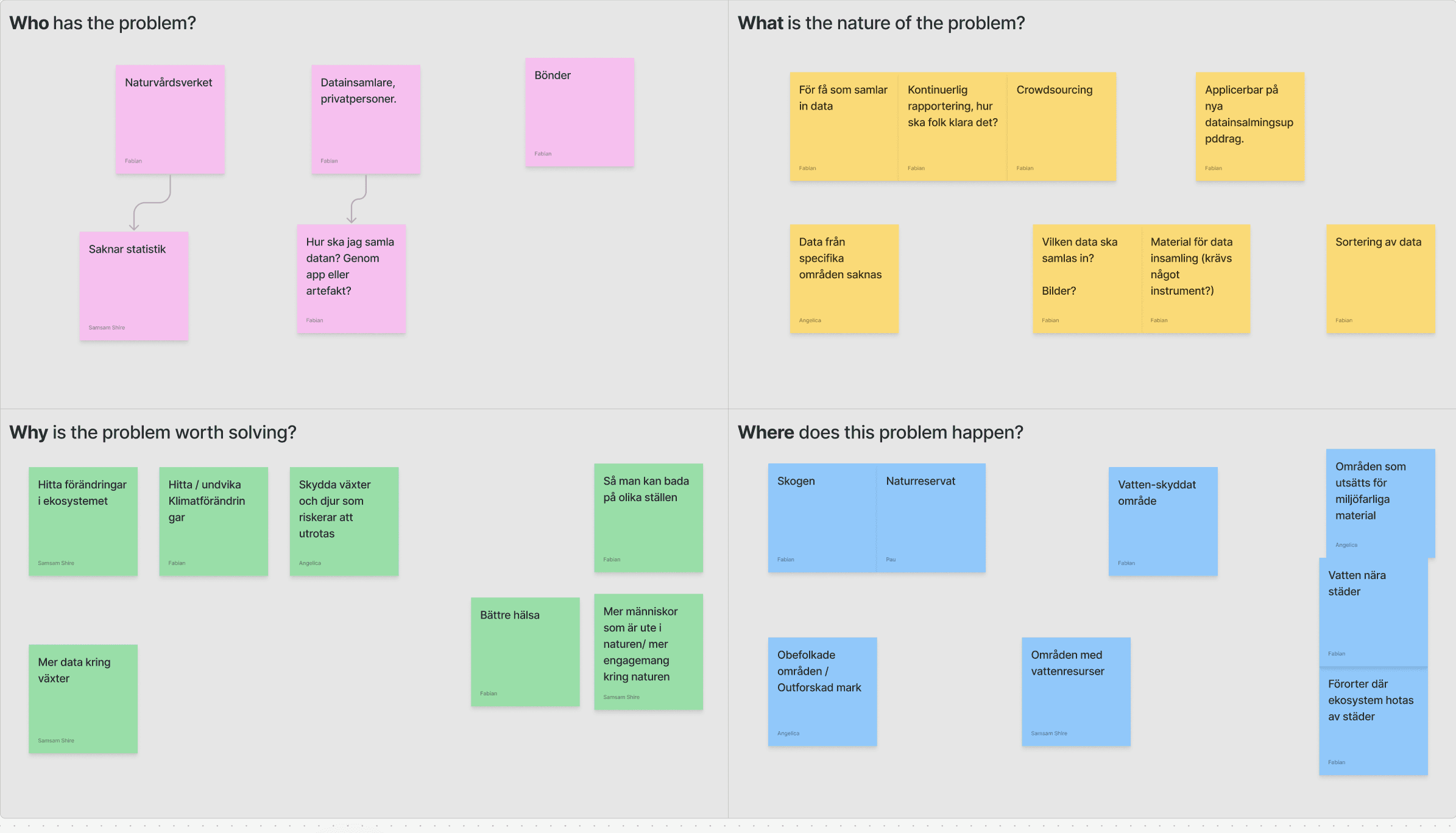
Exploration of the problem space in order to formulate potential needs. This template helps to identify stakeholders and the situation at hand. It focuses on ideas and exploration. Findings: Data collectors do not know how or what to use to collect data to gain more knowledge about their local area or where they are located. Nor is there any motivation to do this continuously.
Prototyping i low fidelity
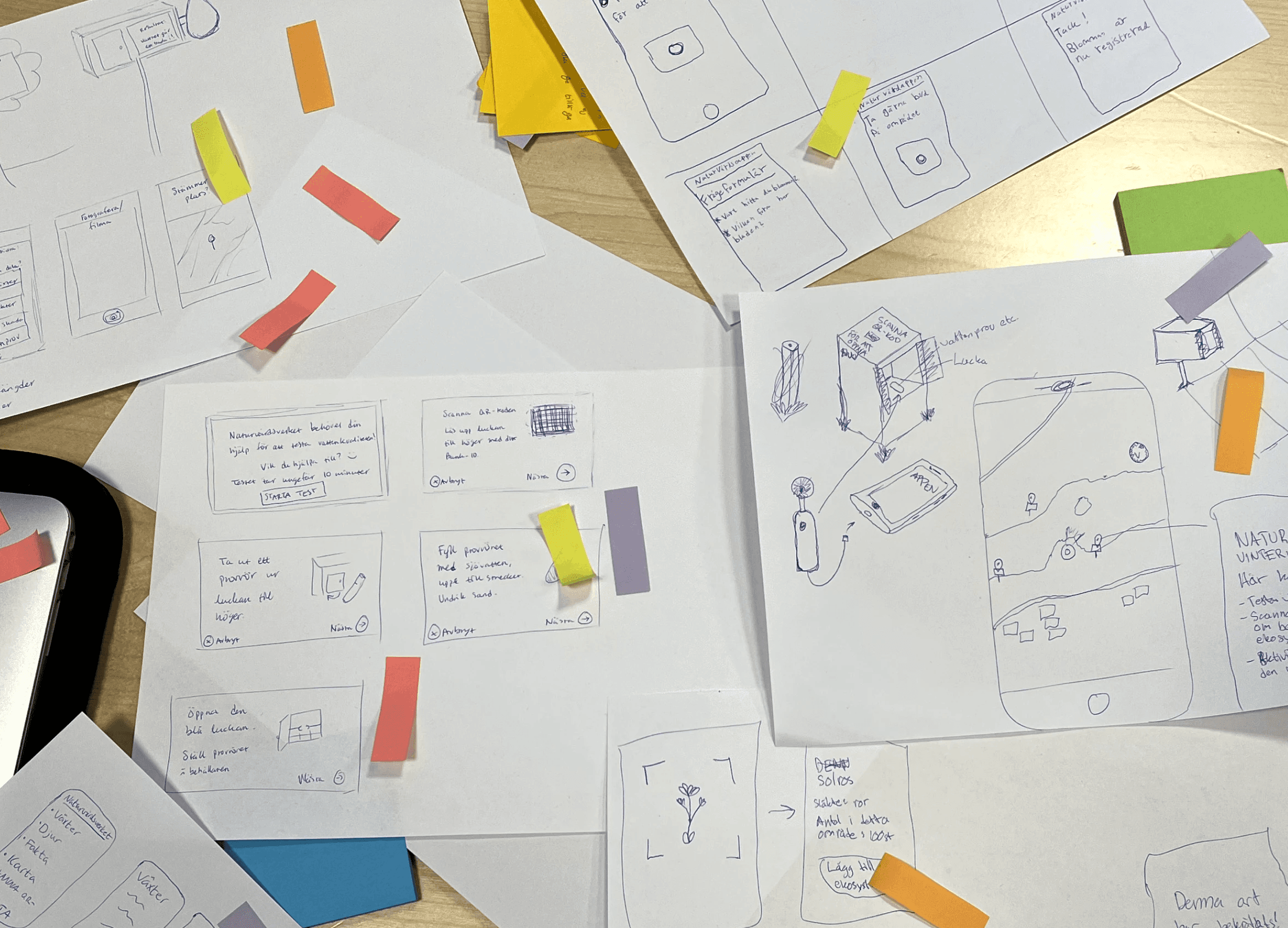
Sketching in divergent and konvergent phases is crucial before going towards higher cost prototypes. The fundamental aspects of the design can be iterated fast and easy, since there is lots of room to really be critical about the ideas that come up. During this stage og the design process, we want to really explore the design space, all the possibilities within the set context. Findings: The user should be able to check the surrounding waters, it's quality and collect data for Naturvårdsverket. (An app and artifact was a requirement from the course).
"The box" + testing
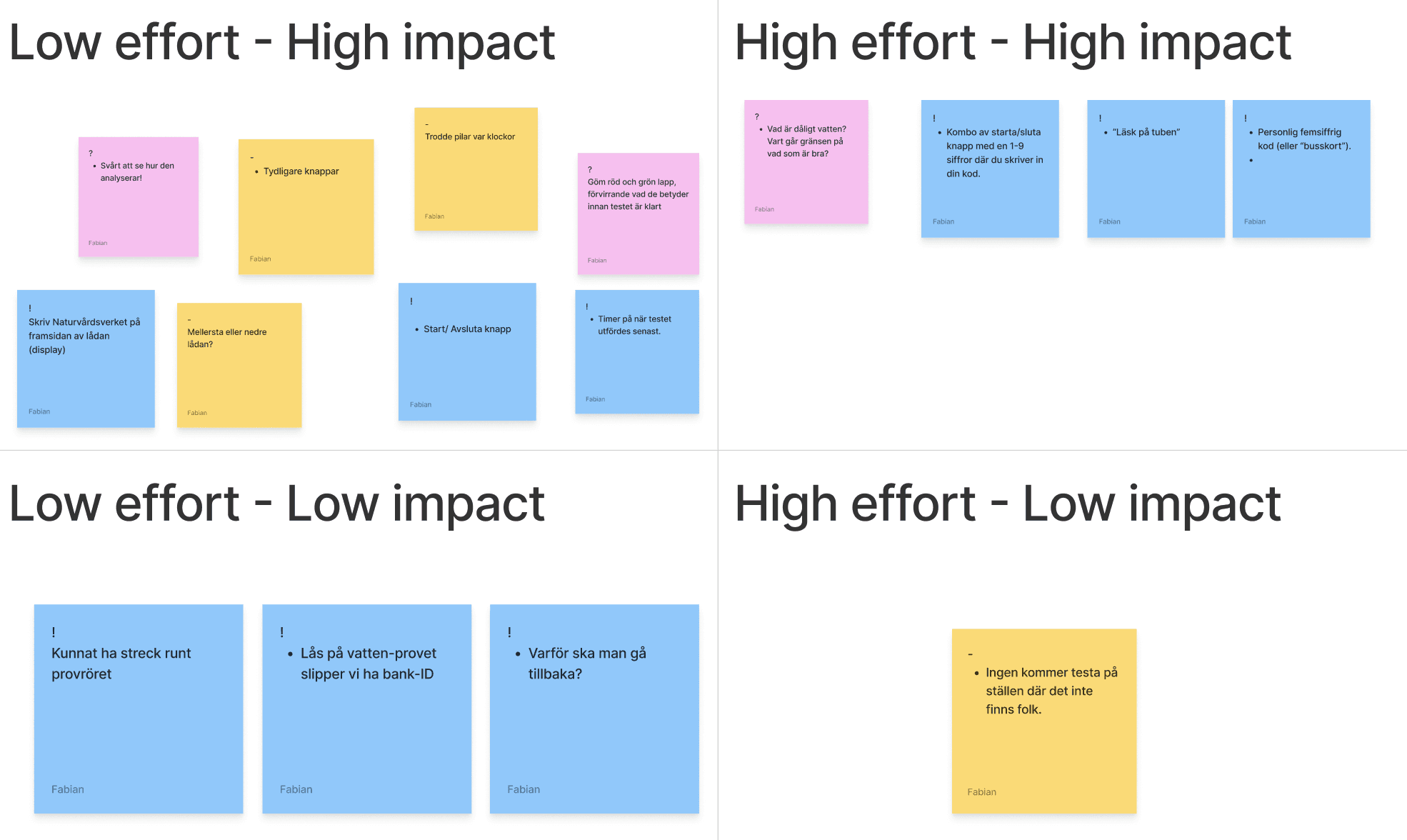
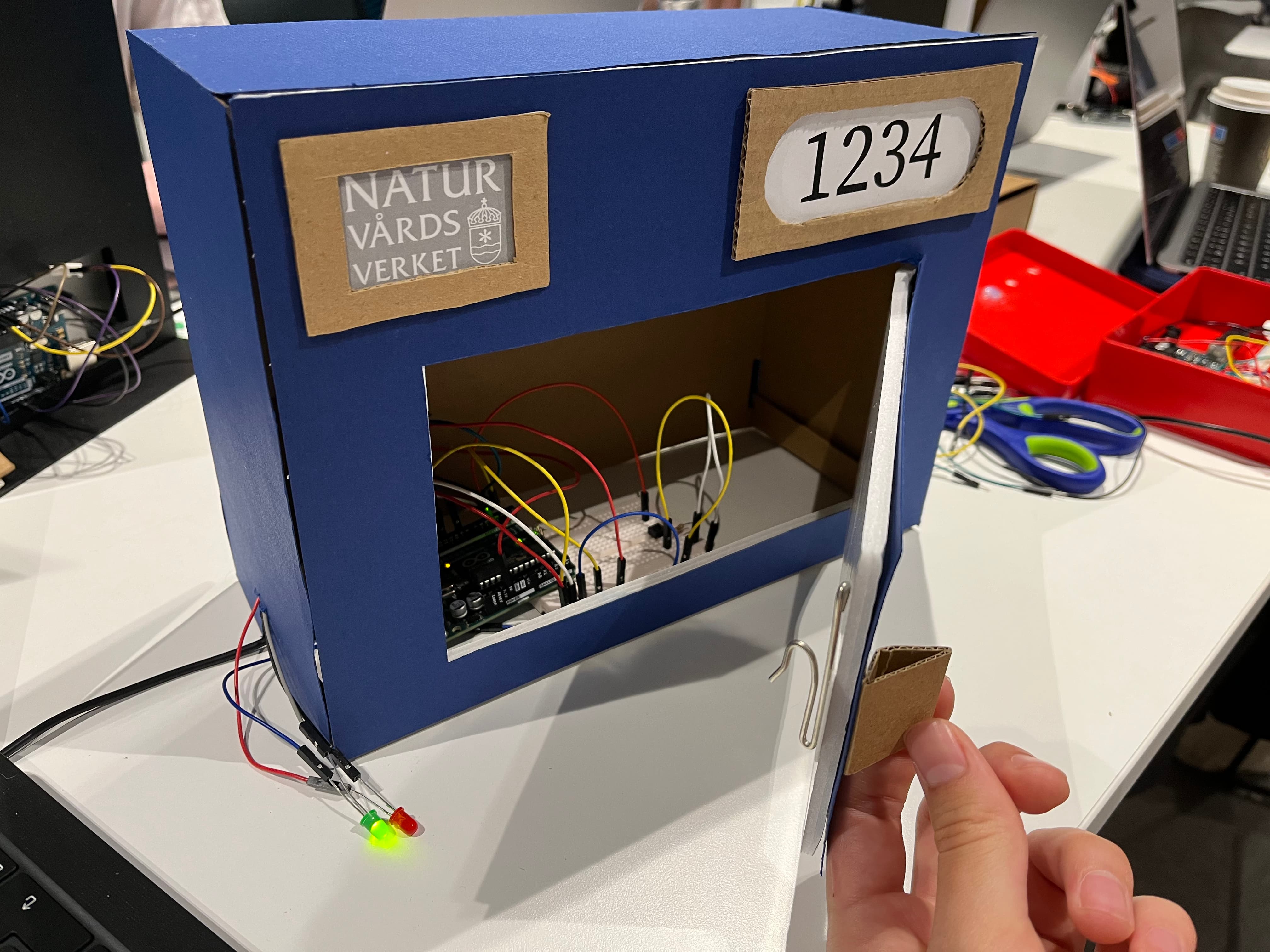
We prototyped "The box" in cardboard and mapped out the user flows, to further test the role of our solution. We got feedback from other students in the design studio which took part in scenario based testing. This was then mapped in an impact/effort matrix for future iterations.
High fidelity with X Code
In later iterations the group split to focus and try out their own ideas as part of the course. I decided to keep on going with the data/findings from earlier iterations to refine "The box" in combination with an digital prototype in X Code (shown at the start). "The box" had implementation elements trough Arduino, which was later connected to the digital mobile prototype.
The course
A course in digital and physical prototyping. Naturvårdsverket (fictive) wants a continuous reporting of data from private individuals. The prototype will also support “new data collection assignments”. I need to create a physical and a digital prototype that will be in line with the brand and maintain a level that it can be tested interactively. In addition, a design system will be created.
Further reading
Read about the project in depth. I've made a design system powerpoint which explain all aspects of my prototypes.
You will be redirected to Google Drive.